
Can Exercise Really Help Lower High Blood Pressure? Here's What the Research Says
If you've been told your blood pressure is a little too high, you've probably also been told to "get more exercise." It's advice we hear so often that it can start to sound like a throwaway line, but it turns out the science behind it is surprisingly strong. Regular movement doesn't just help you feel better; it can measurably bring your blood pressure down, sometimes by an amount similar to what you'd expect from medication.
In this post, we'll break down what high blood pressure actually is, how different types of exercise affect it, and what the latest research recommends, all in plain, everyday language.
First, What Is Blood Pressure (and What Do Those Two Numbers Mean)?
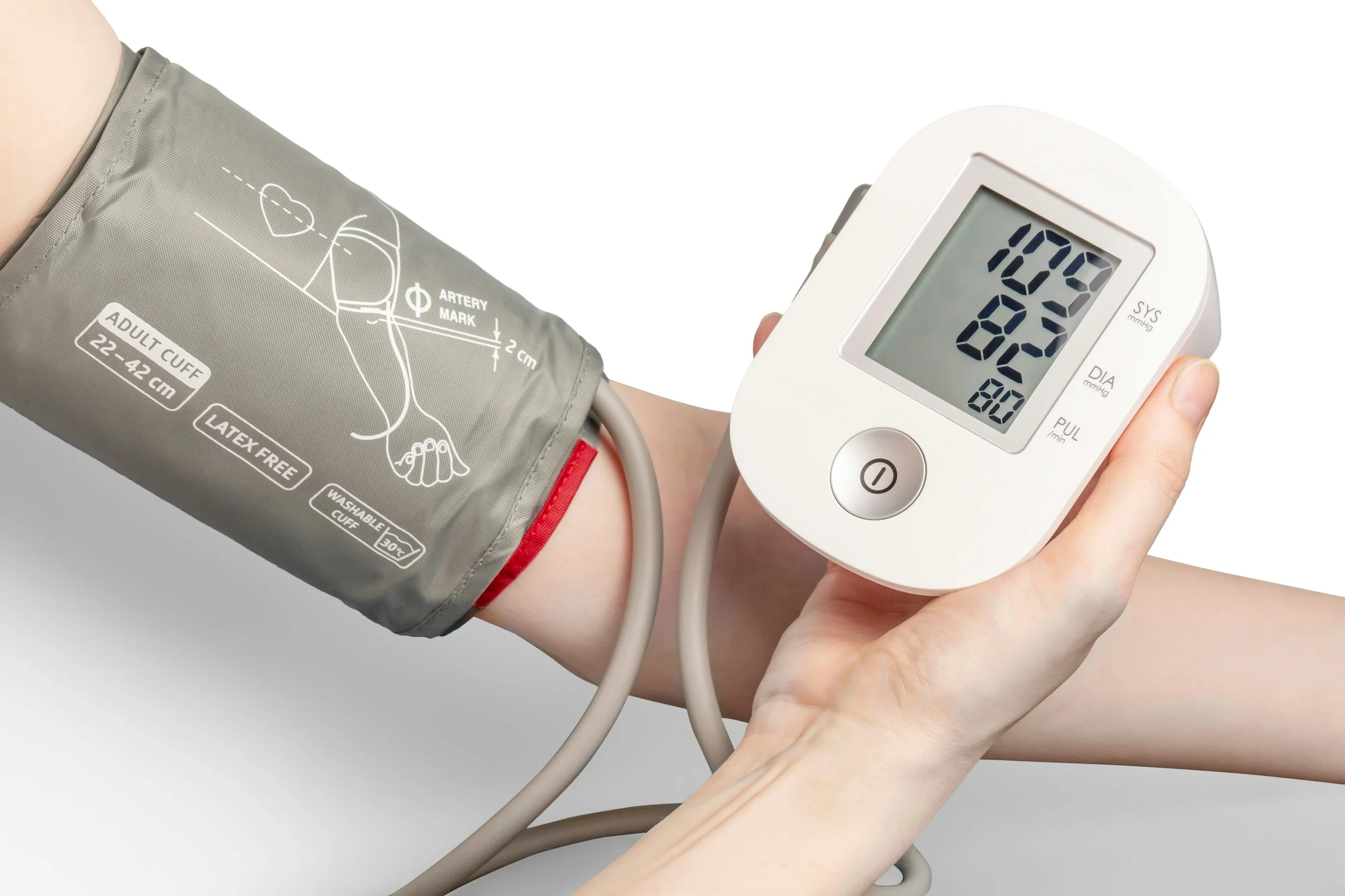
Every time your heart beats, it pushes blood through your arteries. This creates pressure against the artery walls, and that pressure is what we measure when we take a blood pressure reading. You'll always see two numbers, like "120 over 80," and each one tells you something different:
Systolic pressure (the top number) is the pressure in your arteries at the exact moment your heart squeezes and pushes blood out. Think of it as the "peak" pressure.
Diastolic pressure (the bottom number) is the pressure in your arteries in between heartbeats, when your heart is relaxed and refilling with blood. Think of it as the "resting" pressure.
When either number is consistently too high, doctors call this hypertension, the medical term for high blood pressure. Over time, high blood pressure makes your heart and blood vessels work harder than they should, which raises the risk of heart disease and stroke. The good news is that both numbers respond to exercise, though not always in exactly the same way, as you'll see below.
Steady, Moderate Exercise (Like Brisk Walking) Makes a Real Difference
One of the simplest and most accessible forms of exercise, brisk walking, has been shown to meaningfully lower blood pressure in people with hypertension. A 2024 review that pooled results from nine separate studies found that brisk walking produced a clear, consistent drop in systolic pressure across almost all the studies, along with a smaller improvement in diastolic pressure. The researchers concluded that this kind of moderate-intensity walking is a practical, low-cost way for people with high blood pressure to improve their cardiovascular health.
This lines up with a larger and more detailed 2023 analysis of 34 clinical trials, which looked specifically at "aerobic" exercise, the kind that gets your heart and lungs working, like walking, jogging, cycling, or swimming. That study found a genuine dose-response relationship: the more minutes of aerobic exercise per week, the bigger the drop in blood pressure, up to a sweet spot of about 150 minutes per week (which works out to roughly 30 minutes, five days a week). At that amount, the average reduction was substantial, around 7 points off the systolic number and nearly 6 points off the diastolic number, a change that's considered clinically meaningful, similar in size to what some blood pressure medications achieve.
It's Not Just About the Gym Workout, It Affects Blood Pressure All Day
You might wonder whether these improvements only show up when you're being tested in a clinic, or whether they carry over into everyday life. A review of randomized trials looking at "ambulatory" blood pressure, meaning it's tracked with a wearable monitor over a full 24-hour period, capturing your real, everyday pressure rather than just a single reading at the doctor's office — found that regular exercise training genuinely lowers blood pressure throughout the day and night, not just in a lab setting. This matters because all-day blood pressure is actually a stronger predictor of heart disease risk than a single office reading, so this kind of everyday improvement is exactly what we want to see.
Which Type of Exercise Works Best? A Large Analysis Has a Surprising Answer
With so many types of exercise out there (walking, weightlifting, swimming, yoga), which one actually works best for blood pressure? A large-scale 2023 study that combined and compared results across many different exercise types (a method called a "network meta-analysis," which lets researchers rank different treatments against each other even when they haven't been tested head-to-head) found that isometric exercise training came out on top for lowering resting blood pressure. Isometric exercise means holding a muscle contraction without movement, think of wall sits, planks, or squeezing a handgrip device, as opposed to "dynamic" exercises where your muscles are constantly lengthening and shortening, like walking or cycling.
This finding was echoed by a smaller, focused review of low-intensity handgrip exercise (essentially, repeatedly squeezing a small hand-held device), which found it lowered both the systolic and diastolic numbers in people with elevated or high blood pressure, and the effect was even bigger in people who were already on blood pressure medication. The appeal here is that handgrip training is simple, cheap, and can be done at home in just a few minutes a day.
Exercise Can Also Help Your Body Handle Stress Better
Blood pressure doesn't just rise during exercise or sit at one steady number all day; it also spikes in response to stress, whether that's a tense work deadline, an argument, or just sitting in traffic. These stress-related spikes matter more than you might think: research has linked them to a higher future risk of developing hypertension and other heart problems.
A 2023 review looked specifically at whether regular exercise training could blunt these stress-related spikes and found that it can. People who exercised regularly showed a smaller rise in systolic blood pressure when faced with a stressful task compared to those who didn't exercise. Interestingly, this calming effect on stress-related spikes was strongest in people who already had hypertension, suggesting that regular movement may offer extra protection for the people who need it most.
So, What Does This Mean for You?
Bringing it all together, the research points to a few practical takeaways:
Aim for consistency over intensity. Around 150 minutes a week of moderate aerobic activity (walking counts!) appears to be a genuine sweet spot for blood pressure improvement.
Don't overlook isometric exercises. Simple holds like wall sits, planks, or handgrip squeezes are backed by strong evidence and are easy to fit into a busy day.
The benefits go beyond the gym. Regular exercise can lower your blood pressure throughout your entire day, not just during your workout, and may also help you handle stressful moments with less of a spike.
Always check with your doctor first, especially if you have existing heart or blood pressure conditions, before starting a new exercise routine, they can help you find an approach that's both safe and effective for your situation.
Exercise isn't a replacement for medical care, but the evidence is clear that it's one of the most powerful, accessible tools we have for supporting healthy blood pressure, and unlike a lot of health advice, this is one piece that's genuinely backed by strong, repeated science.
If you’ve been told by your GP to start exercising to manage high blood pressure, you don’t have to figure it out alone. The right exercise plan can make a powerful difference, but it needs to be safe, effective, and tailored to your body and current health. At ROPE AU, we specialise in helping people build sustainable exercise routines to support blood pressure control and long-term heart health.
Ready to take the first step? Book your free 15-minute consultation today to get personalised guidance, or reach out directly via WhatsApp for a quick chat about how we can help you get started.
Bibliography
Mariano, I. M., Amaral, A. L., Ribeiro, P. A. B., & Puga, G. M. (2023). Exercise training improves blood pressure reactivity to stress: a systematic review and meta-analysis. Scientific Reports, 13, 10962. https://www.nature.com/articles/s41598-023-38041-9
Malem, R., Ristiani, R., & Ali Puteh, M. (2024). Brisk Walking Exercise Has Benefits of Lowering Blood Pressure in Hypertension Sufferers: A Systematic Review and Meta-Analysis. Iranian Journal of Public Health, 53(4), 774–784. https://pmc.ncbi.nlm.nih.gov/articles/PMC11493580/
Loaiza-Betancur, A. F., & Chulvi-Medrano, I. (2020). Is Low-Intensity Isometric Handgrip Exercise an Efficient Alternative in Lifestyle Blood Pressure Management? A Systematic Review. Sports Health, 12(5), 470–477. https://journals.sagepub.com/doi/abs/10.1177/1941738120943882
Edwards, J. J., Deenmamode, A. H. P., Griffiths, M., Arnold, O., Cooper, N. J., Wiles, J. D., & O'Driscoll, J. M. (2023). Exercise training and resting blood pressure: a large-scale pairwise and network meta-analysis of randomised controlled trials. British Journal of Sports Medicine, 57(20), 1317–1326. https://bjsm.bmj.com/content/57/20/1317.abstract
Jabbarzadeh Ganjeh, B., Zeraattalab-Motlagh, S., Jayedi, A., Daneshvar, M., Gohari, Z., Norouziasl, R., Ghaemi, S., Selk-Ghaffari, M., Moghadam, N., Kordi, R., & Shab-Bidar, S. (2023). Effects of aerobic exercise on blood pressure in patients with hypertension: a systematic review and dose-response meta-analysis of randomized trials. Hypertension Research, 47, 385–398. https://www.nature.com/articles/s41440-023-01467-9
Saco-Ledo, G., Valenzuela, P. L., Ruiz-Hurtado, G., Ruilope, L. M., & Lucia, A. (2020). Exercise Reduces Ambulatory Blood Pressure in Patients With Hypertension: A Systematic Review and Meta-Analysis of Randomized Controlled Trials. Journal of the American Heart Association, 9(24), e018487. https://www.ahajournals.org/doi/full/10.1161/JAHA.120.018487