
Exercise and Hypertension: Here's What the Research Says
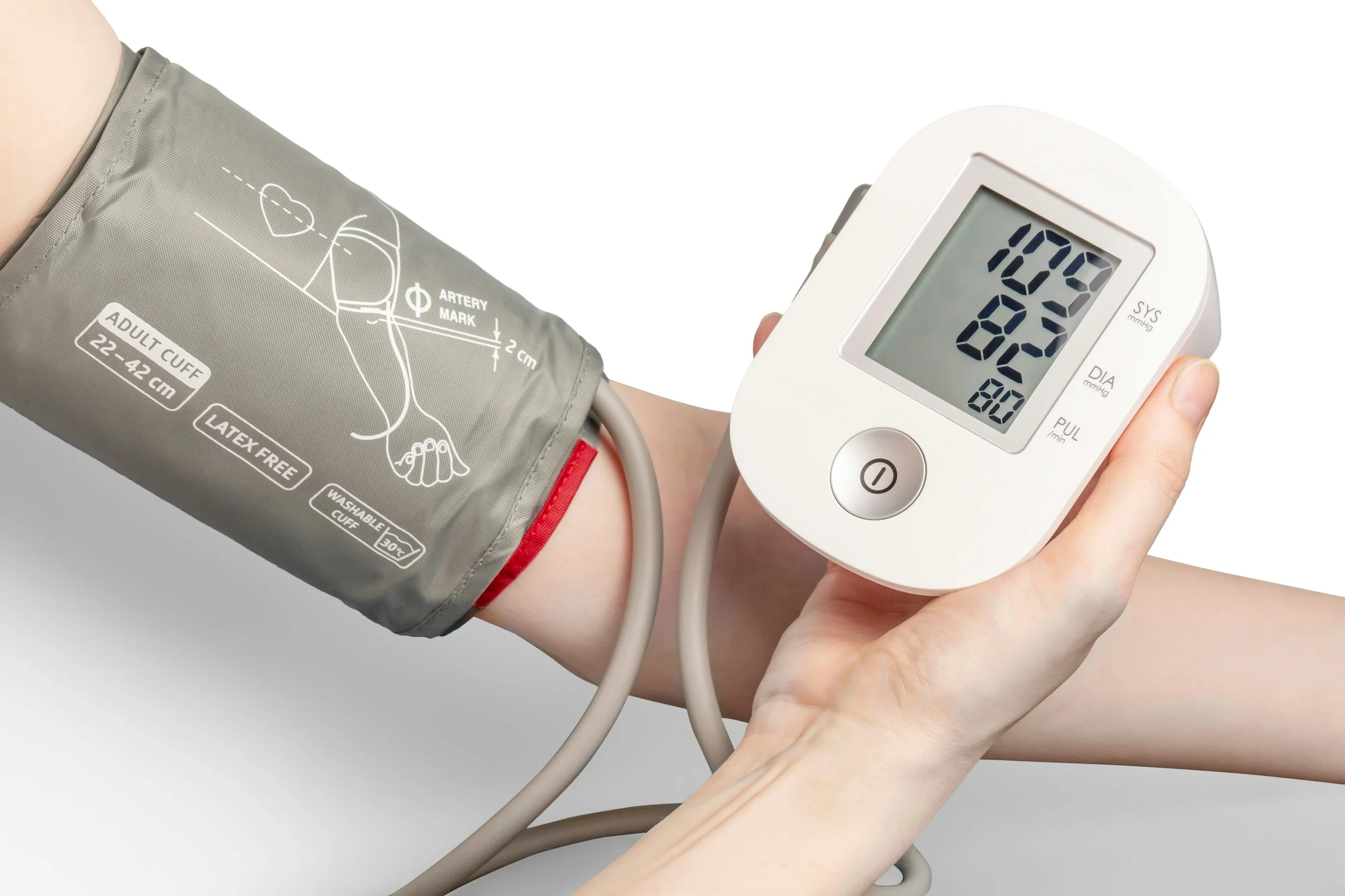
If you have ever been told that your blood pressure is a little too high, that you have hypertension, then you have probably also heard that you “need more exercise”. Exercise has recently become a first response to hypertension since it is one of the most effective ways to get it under control, and, as you’re about to see, sometimes even more effective than medicine. The problem is that the message from doctors is often a little bit vague: “Do more exercise”. But what kind of exercise? Where do I begin with exercise? Do all kinds of exercise work the same towards hypertension?
Well, keep on reading if you want to find out not only which exercise is more effective but also where you can start to tackle hypertension with exercise. In this post, I’ll break down for you what high blood pressure (hypertension) actually is, and how different exercises can help you reduce it. And at the end, you will get an example of a workout for a patient with hypertension.
First of all, what is Hypertension?
As a starter, think of your body as a big machine. Let’s say a big and complex car. Where a device named the Heart, pushes blood throughout the body. Blood, which serves as the fuel in this metaphor, transports oxygen and other nutrients to every part of the body. This makes your body function normally. Well, when the heart pumps the blood, it does it at a certain strength, and this creates certain pressure against the walls of the arteries. When we measure this pressure, you will always find two numbers:
The Systolic Pressure (the top number), often referred to as “peak” pressure. Is the pressure in your arteries at the exact moment that your heart squeezes and pushes the blood out to the arteries.
Then you have the Diastolic Pressure (the bottom number), often referred to as “resting” pressure. It is the pressure in your arteries between heartbeats, when your heart is relaxed and refilling itself with the blood coming from your veins.
When those numbers are consistently too high, doctors refer to it as hypertension or high blood pressure. When it is high, your heart and blood vessels need to work harder than they should to pump the same amount of blood, which, sustained over time, increases the risk of heart disease or stroke. But the good news is that with exercise, we can influence those numbers and bring them down.
Steady, moderate exercise makes a real difference in Hypertension
Now, imagine there were a pill that could cure all our maladies without facing a single side effect; in fact, every side effect of this pill was a positive one, we would take it without thinking too much about it. Imagine there was a pill that could reduce Hypertension but, at the same time, improve your cardiovascular health, increase your VO2max (the maximum amount of oxygen your body can take in, transport, and use during intense exercise) and increase your strength. Would you take it?
Well, a 2024 review that looked at results from nine different studies found that brisk walking had a clear, consistent drop in both Systolic and Diastolic Blood Pressure. In this review, the researchers concluded that this kind of moderate-intensity exercise could be a practical and low-cost way for people to control their blood pressure and improve their cardiovascular health (Malem et al., 2024).
Moreover, another larger study in 2023 analysed 34 clinical trials, which looked specifically at aerobic exercise (the kind of exercise that gets your heart and lungs working) and its effects on blood pressure. Things like walking, jogging, cycling or swimming were the main exercises that were tracked. The study found a clear dose-response relationship between exercise and high blood pressure, concluding that there is a sweet spot of 150 minutes per week, where the biggest drop in blood pressure occurs. This means that doing any of those exercises for 30 minutes per day at a moderate intensity for five days a week will reduce your blood pressure consistently. To such an extent that it ended up dropping the blood pressure in the subjects by an average of 7 points in systolic pressure and 6 points in diastolic pressure (Jabbarzadeh Ganjeh et al., 2023). This is a meaningful drop, as it is similar to the drop experienced with hypertension and blood pressure medications. But without any side effects, and with benefits like the ones mentioned earlier.
Okay, exercise drops blood pressure, but what about the rest of the day? Will my blood pressure come back up?
Short answer: Yes. Longer answer, another review took a look to randomised trials of “ambulatory” blood pressure, which means that the blood pressure was tracked 24/7 with a wearable monitor. Capturing this way the real everyday blood pressure of the patients. This review found that regular exercise training lowered blood pressure immediately after exercising, but also throughout the day and night. The results showed that exercise at a moderate intensity for at least 30 minutes was enough to widen the blood vessels, make the heart more efficient at pumping blood and reduce the activity in our hormone system that retains salt and constricts our blood vessels, among others (Saco-Ledo et al., 2020). All these were sustained between 12 to 24 hours, which means that training once a day for 30 minutes for 5 days per week or 150 minutes per week in total. As suggested in the reviews, this will make those results sustainable over time, reducing your blood pressure without the need for medication.
What about other kinds of exercise? (Weightlifting, Yoga, Swimming…)
There are so many choices out there, and a large-scale 2023 study compared the results across all different types of exercise.The best outcome was a mix of aerobic training combined with resistance training. As found earlier, aerobic training at a moderate intensity works; swimming, brisk walking, jogging, running or cycling could be examples of it. But when mixed with resistance training, things like weightlifting, isometric exercise training and training with resistance bands had a bigger impact on reducing hypertension (Edwards et al., 2023).
A word of CAUTION. Even though isometric exercises rank among the best of resistance training to lower blood pressure (Edwards et al., 2023; Loaiza-Betancur & Chulvi-Medrano, 2020), they have to be performed correctly, or they can be DANGEROUS. Isometric exercises refer to those exercises where you hold a position without movement. Think of wall sits, planks or squeezing a handgrip device. Sometimes, with this kind of exercise, we tend to perform what is called apnoea or breath-holding. If you have hypertension, you MUST avoid breath-holding at all costs. It can increase your blood pressure momentarily, making it dangerous for your already high-blood-pressure cardiovascular system. When performing isometric exercises, maintain steady breathing to avoid this.
Exercise can also help your body handle stress better
Blood pressure doesn't just rise during exercise or sit at one steady number all day; it also spikes in response to stress, whether that's a tense work deadline, an argument, or just sitting in traffic. These stress-related spikes matter more than you might think: research has linked them to a higher future risk of developing hypertension and other heart problems.
A 2023 review looked specifically at whether regular exercise training could blunt these stress-related spikes and found that it can. People who exercised regularly showed a smaller rise in systolic blood pressure when faced with a stressful task compared to those who didn't exercise. Interestingly, this calming effect on stress-related spikes was strongest in people who already had hypertension, suggesting that regular movement may offer extra protection for the people who need it most.
Does this mean that if I do exercise I don’t need medication?
NO. If you are already on hypertension medication, keep on taking it. Another review in 2020 found that the effect of exercise in people who were already on blood pressure medication was even bigger, and in some of the patients it led to a reduction of the medication (Loaiza-Betancur & Chulvi-Medrano, 2020). This will require monitoring on your part. If your blood pressure starts to become consistently low (lower than 90mmHg the Systolic and lower than 60 mmHg Diastolic), you will need to review with your doctor to see if the medication can be reduced.
In summary, what does this mean for you?
Bringing in all the information together, these are the main takeaways that can help you benefit from exercise to reduce hypertension:
Aim for consistency over intensity. Training 150 minutes per week of moderate aerobic exercise (walking counts) appears to be a sweet spot for reducing blood pressure. Being the most effective to do 30 to 50 minutes of combined aerobic and resistance training for 3 to 5 days per week.
Isometric exercises provide huge benefits, but can come with associated risks. Make sure to avoid breath-holding or apnoea while performing the exercises.
Benefits that last. Regular exercise has proven to lower blood pressure throughout the day, not just after or during the workout. Plus, it helped the patients to increase their strength, their VO2 max, reduce their stress and increase their vitality, among others.
Lastly, always check with your doctor first. Especially if you have existing hypertension or other heart conditions. Once your doctor clears you to exercise, then it is safe to start.
As always, exercise isn’t a replacement for medical care. But it is more than clear that it is one of the most powerful and accessible tools we have to battle hypertension. This is why doctors often prescribe exercise as a first response to a patient with high blood pressure, because it is backed by strong evidence and its benefits go beyond only reducing hypertension.
If you have been told by your doctor that you have high blood pressure (hypertension) and that you should start exercising to manage it. You don’t have to figure it out alone. At ROPE AU, we specialise in helping people to build sustainable exercise programs that help our patients to battle conditions like hypertension while achieving their fitness goals.
Ready to take the first step? Book a free 15-minute consultation today to get personalised guidance, or simply reach out directly via WhatsApp. If not ready yet, don’t hesitate to claim your free workout sample here.
Bibliography
Mariano, I. M., Amaral, A. L., Ribeiro, P. A. B., & Puga, G. M. (2023). Exercise training improves blood pressure reactivity to stress: a systematic review and meta-analysis. Scientific Reports, 13, 10962. https://www.nature.com/articles/s41598-023-38041-9
Malem, R., Ristiani, R., & Ali Puteh, M. (2024). Brisk Walking Exercise Has Benefits of Lowering Blood Pressure in Hypertension Sufferers: A Systematic Review and Meta-Analysis. Iranian Journal of Public Health, 53(4), 774–784. https://pmc.ncbi.nlm.nih.gov/articles/PMC11493580/
Loaiza-Betancur, A. F., & Chulvi-Medrano, I. (2020). Is Low-Intensity Isometric Handgrip Exercise an Efficient Alternative in Lifestyle Blood Pressure Management? A Systematic Review. Sports Health, 12(5), 470–477. https://journals.sagepub.com/doi/abs/10.1177/1941738120943882
Edwards, J. J., Deenmamode, A. H. P., Griffiths, M., Arnold, O., Cooper, N. J., Wiles, J. D., & O'Driscoll, J. M. (2023). Exercise training and resting blood pressure: a large-scale pairwise and network meta-analysis of randomised controlled trials. British Journal of Sports Medicine, 57(20), 1317–1326. https://bjsm.bmj.com/content/57/20/1317.abstract
Jabbarzadeh Ganjeh, B., Zeraattalab-Motlagh, S., Jayedi, A., Daneshvar, M., Gohari, Z., Norouziasl, R., Ghaemi, S., Selk-Ghaffari, M., Moghadam, N., Kordi, R., & Shab-Bidar, S. (2023). Effects of aerobic exercise on blood pressure in patients with hypertension: a systematic review and dose-response meta-analysis of randomized trials. Hypertension Research, 47, 385–398. https://www.nature.com/articles/s41440-023-01467-9
Saco-Ledo, G., Valenzuela, P. L., Ruiz-Hurtado, G., Ruilope, L. M., & Lucia, A. (2020). Exercise Reduces Ambulatory Blood Pressure in Patients With Hypertension: A Systematic Review and Meta-Analysis of Randomized Controlled Trials. Journal of the American Heart Association, 9(24), e018487. https://www.ahajournals.org/doi/full/10.1161/JAHA.120.018487