
Exercise and Menopause: How Movement Supports You Through the Transition
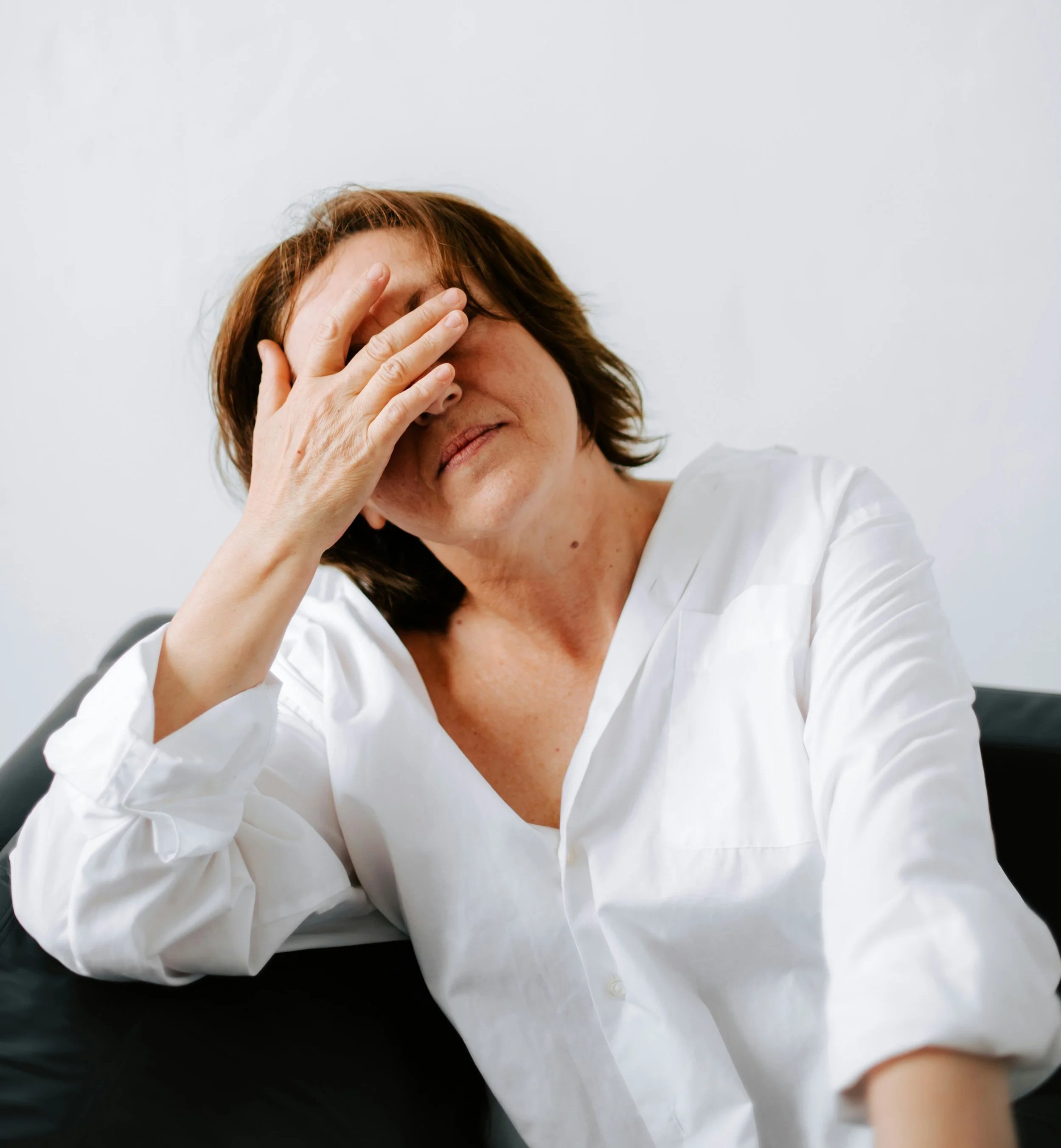
Menopause brings a lot of change at once, shifting hormones, disrupted sleep, mood swings, hot flashes, and sometimes a general sense that your body isn't quite behaving the way it used to. It's completely natural, but that doesn't make it easy.
The good news is that one of the most well-studied, accessible tools for feeling better through this transition is something you already have access to: exercise. In this post, we'll break down what the research actually shows, in plain language, so you can understand what's proven, what's promising, and what's still uncertain.
First, What's Actually Happening in Menopause?
Menopause is officially defined as the point when a woman has gone 12 months without a menstrual period, usually happening between the ages of 45 and 55. It's caused by the ovaries gradually producing less estrogen, a hormone that does far more in the body than just regulate the menstrual cycle, it also affects blood vessels, bones, mood-related brain chemistry, and metabolism. The years around this transition (called perimenopause) and the years after (postmenopause) can bring a wide set of symptoms: hot flashes, night sweats, sleep problems, mood changes, joint aches, and a higher long-term risk of conditions like osteoporosis and heart disease.
Because so much of this is tied to declining estrogen, and because exercise directly interacts with hormone levels, blood vessel health, bone density, and brain chemistry, it makes physiological sense that movement could help. Let's look at what specific types of exercise have been shown to do.
Aerobic Exercise Appears to Protect Your Heart and Blood Vessels
One of the lesser-known effects of menopause is that it accelerates changes in blood vessel health, even in women who feel completely fine day-to-day. As estrogen declines, blood vessels can become stiffer and less able to relax and expand properly (something called "vascular function"), which is part of why heart disease risk rises after menopause. A recent review of the science on this topic found that regular aerobic exercise during the early postmenopausal years may slow this vascular decline by improving the availability of nitric oxide (a molecule that helps blood vessels relax) and estradiol, while also promoting healthier blood vessel remodeling and lowering body-wide inflammation. In simpler terms: getting your heart rate up regularly, through activities like brisk walking, cycling, or swimming, appears to help protect your cardiovascular system specifically during the window when that protection matters most.
Exercise May Meaningfully Improve Mood
Mood changes, including a higher risk of depression, are common during the menopausal transition and are thought to be linked to shifting estrogen levels affecting brain chemistry. A recent, large-scale analysis that directly compared different types of exercise for treating depressive symptoms in menopausal women found that aerobic exercise came out on top, closely followed by "multimodal" exercise (a mix of styles, such as aerobic exercise combined with stretching). Both stretching exercises and mind-body exercise (such as yoga) also showed meaningful benefits, though somewhat smaller ones. The researchers suggested this may be partly because aerobic exercise can raise estrogen-related signalling in the body and reduce inflammation, both of which are linked to mood regulation, and because group-based exercise programs also help combat the isolation that can worsen low mood during this life stage.
Strength Training Offers a Wide Range of Benefits
Strength (or "resistance") training, think weights, resistance bands, or bodyweight exercises, has its own distinct set of benefits for menopausal women. A systematic review pulling together 12 clinical trials on strength training found improvements across a broad range of areas: leg and pelvic floor strength, day-to-day physical activity levels, bone density, hormonal and metabolic markers, and in some studies, heart rate and blood pressure and a reduction in hot flashes. One of the individual studies included in that review found that after 12 weeks of resistance band training, women saw improvements in hormone levels along with reductions in systolic blood pressure (the top number in a blood pressure reading, representing the pressure in your arteries when your heart beats) and body fat percentage.
That said, the review's authors were honest that the picture isn't fully settled: because the studies used many different types and amounts of strength training, it's not yet clear exactly which specific approach works best. What is clear is that strength training as a category shows real, measurable benefits, you don't need a highly specific program to see results, just a consistent one.
Bone Health Deserves Special Mention
As estrogen declines, bone density tends to decline with it, raising the risk of osteoporosis (a condition where bones become fragile and more likely to fracture) after menopause. This is one of the areas where strength training shows some of its clearest evidence: several of the studies referenced above found that "impact" exercises, such as jumping or hopping movements, along with heavier resistance training, improved bone density at the hip and femoral neck (the top of the thigh bone, a common fracture site) in postmenopausal women. This is a good reminder that the benefits of exercise during menopause go beyond how you feel day-to-day and extend to protecting your body for decades to come.
The Evidence Is Still Developing for Some Specific Symptoms
It's worth being upfront: not every claim about exercise and menopause is equally well-proven. A large overview that pulled together 17 separate systematic reviews on this topic found that yoga has fairly consistent evidence for improving physical symptoms (like joint pain, fatigue, and sleep) and overall symptom scores. Aerobic exercise showed more mixed results; some studies found real benefits for symptoms and hot flashes, while others found no clear effect, and the researchers noted that evidence for resistance training on specific symptoms like hot flashes is still quite limited, simply because fewer large, high-quality studies have been done on it yet.
Similarly, a systematic review focused specifically on quality of life found that exercise showed clear benefits for physical and psychological quality of life, but the evidence didn't yet show a significant improvement in more general or menopause-specific quality-of-life scores. This doesn't mean exercise doesn't help with those areas, it more likely reflects that the studies done so far have been relatively small, and researchers are calling for larger, better-designed trials to confirm what many women already report anecdotally.
What This Means for You
Putting the evidence together, a few practical takeaways emerge:
Aerobic exercise (walking, cycling, swimming, dancing) appears to support both heart and blood vessel health and mood during menopause, and is one of the more consistently backed forms of exercise across the research.
Strength training offers broad benefits — for muscle strength, bone density, metabolic health, and in some cases blood pressure and hot flashes — even though researchers haven't yet nailed down one "best" program.
A mix of exercise types (sometimes called "multimodal" training) may be especially helpful for mood, and also helps keep exercise routines interesting and sustainable.
Consistency matters more than perfection. Across nearly all the studies referenced here, the common thread is that regular movement — most programs ran two to three sessions a week for at least several weeks — is what produces results, not any single "magic" exercise.
Always check with your doctor before starting a new or more intense exercise routine, especially if you have existing health conditions, to make sure your plan is both safe and suited to you.
Menopause is a transition, not a problem to be fixed — but the research is clear that staying active can make that transition considerably smoother, both for how you feel today and for your long-term health.
Navigating exercise through menopause isn't always straightforward, your body's needs are shifting, and generic workout advice doesn't always account for that. That's exactly what I help clients with at ROPE AU. If you'd like personalized guidance to move through this transition feeling stronger, not more depleted, book a free 15-minute consultation or send me a message on WhatsApp. I'd love to help you get started.
Bibliography
Shing, C. L. H., Bond, B., Moreau, K. L., Coombes, J. S., & Taylor, J. L. (2026). The therapeutic role of exercise training during menopause for reducing vascular disease. Experimental Physiology, 111(6), 2813–2827. https://physoc.onlinelibrary.wiley.com/doi/10.1113/EP092191
Wang, H., Li, S., Zhang, X., Zhu, Y., Huang, Q., Guo, K.-L., & Li, D. (2025). Effects of different physical activity interventions on depressive symptoms in menopausal women: a systematic review and network meta-analysis. BMC Public Health, 25, Article 3088. https://link.springer.com/article/10.1186/s12889-025-24398-1
Capel-Alcaraz, A. M., García-López, H., Castro-Sánchez, A. M., Fernández-Sánchez, M., & Lara-Palomo, I. C. (2023). The Efficacy of Strength Exercises for Reducing the Symptoms of Menopause: A Systematic Review. Journal of Clinical Medicine, 12(2), 548. https://www.mdpi.com/2077-0383/12/2/548
Money, A., MacKenzie, A., Norman, G., Eost-Telling, C., Harris, D., McDermott, J., & Todd, C. (2024). The impact of physical activity and exercise interventions on symptoms for women experiencing menopause: overview of reviews. BMC Women's Health, 24, Article 399. https://link.springer.com/article/10.1186/s12905-024-03243-4
Nguyen, T. M., Do, T. T. T., Tran, T. N., & Kim, J. H. (2020). Exercise and Quality of Life in Women with Menopausal Symptoms: A Systematic Review and Meta-Analysis of Randomized Controlled Trials. International Journal of Environmental Research and Public Health, 17(19), 7049. https://www.mdpi.com/1660-4601/17/19/7049